
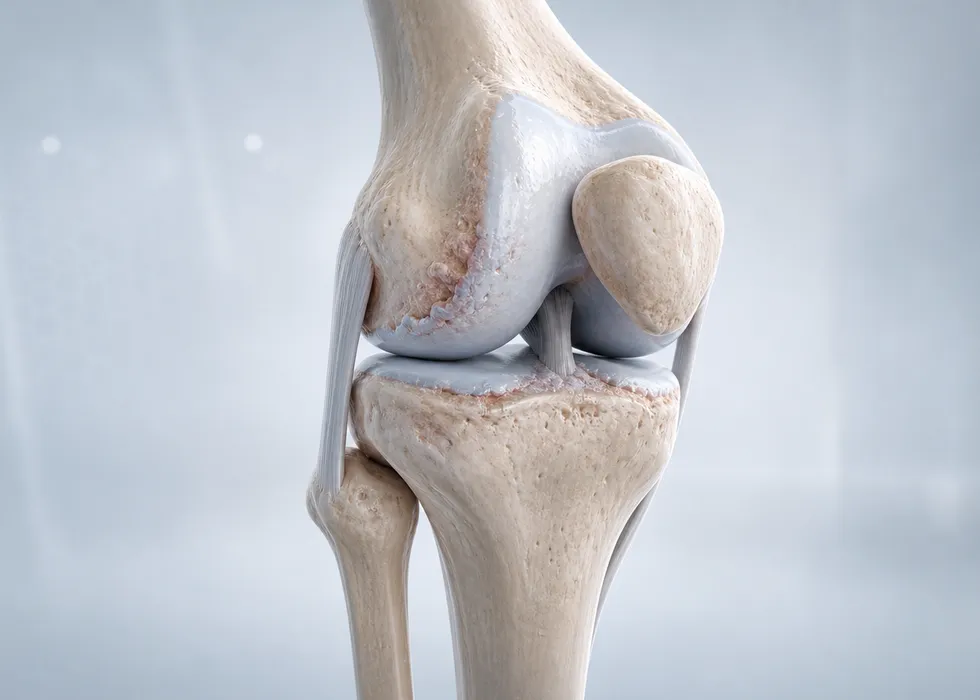
Knee osteoarthritis is not simply “wear and tear.” It is a whole-joint disease that affects cartilage, bone, synovium, ligaments, and surrounding mechanics. Over time it can produce pain, stiffness, reduced walking tolerance, and significant loss of quality of life.
Main Risk Factors
Several factors increase the likelihood of knee osteoarthritis:
- Advancing age
- Previous knee injury
- Obesity
- Alignment problems such as bow-leg or knock-knee pattern
- Muscle weakness and poor load control
- Meniscus or ligament damage
Biomechanics matter greatly. A knee that repeatedly loads more on one compartment can degenerate faster than a well-aligned joint.
Symptoms
Patients commonly report:
- Pain during walking, stairs, or prolonged standing
- Stiffness after rest
- Swelling that comes and goes
- Reduced confidence in the knee
- Difficulty with squatting or rising from a chair
Crepitus, or a grinding sensation, may also occur. In later disease, walking distance and balance can decline significantly.
Diagnosis
Diagnosis depends on symptoms, physical examination, and weight-bearing radiographs. X-rays can show joint-space loss, osteophytes, and changes in the underlying bone. MRI is usually reserved for special situations, such as suspected alternative diagnoses or associated soft tissue injury.
The examination also evaluates whether pain is truly coming from the knee joint or whether hip, spine, tendon, or inflammatory conditions may be contributing.
Conservative Management Comes First
For many patients, effective treatment starts without surgery. The most important pillars are:
- Exercise therapy
- Weight control when appropriate
- Pain relief strategies
- Activity modification
- Improving lower-limb mechanics
Exercise should target quadriceps strength, hip control, gait efficiency, and tolerance to daily function. A good rehabilitation program is structured, progressive, and realistic for the patient.
Medication and Injection Options
Topical or oral anti-inflammatory medication may be useful when medically appropriate. Intra-articular injections can help selected patients during painful flare-ups or while longer-term rehabilitation strategies are being built.
These options can reduce symptoms, but they do not reverse established cartilage loss. They work best as part of a broader management plan rather than as stand-alone treatment.
When Joint Replacement Enters the Conversation
Total knee replacement becomes more relevant when pain remains severe, sleep is affected, deformity progresses, or daily function is no longer acceptable despite structured conservative treatment. Surgery is not chosen based on X-ray appearance alone. The real question is how much the knee limits the person’s life.
Practical Takeaway
Knee osteoarthritis should be approached as a chronic mechanical and biological problem. Early diagnosis, better load management, exercise-based care, and timely surgical referral when necessary offer the best chance of maintaining mobility and independence.