
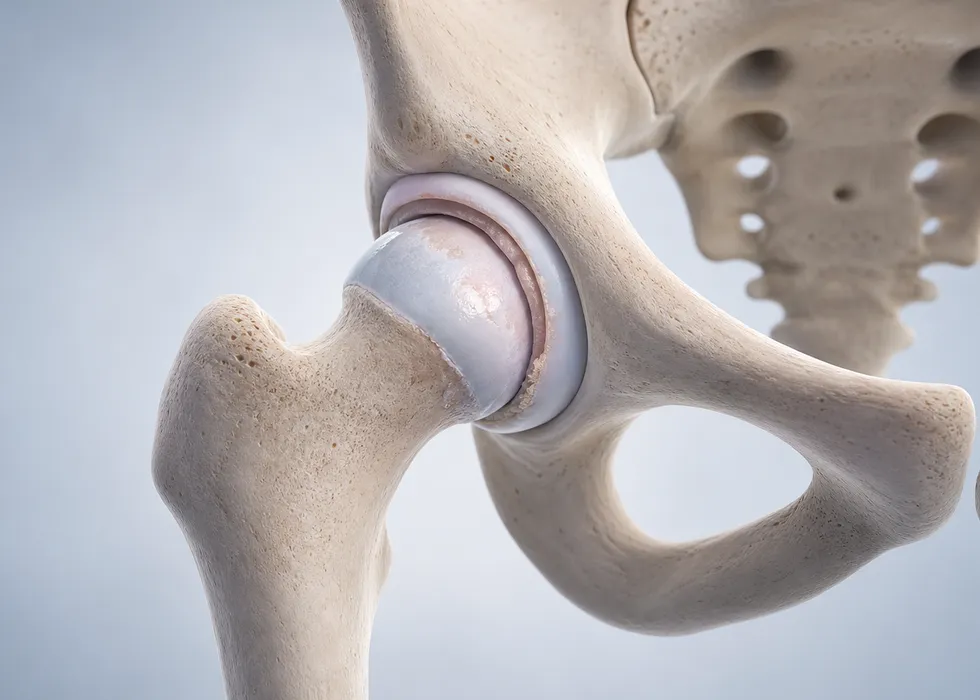
Hip osteoarthritis, also called coxarthrosis, is a degenerative joint disease in which cartilage loss, bony remodeling, and inflammation gradually impair hip motion and function. It is one of the most common causes of groin pain, reduced walking distance, and stiffness in middle-aged and older adults.
Why Hip Osteoarthritis Develops
Some patients develop hip osteoarthritis with age alone, but many cases are influenced by structural factors. Important contributors include:
- Femoroacetabular impingement
- Hip dysplasia
- Previous trauma
- Inflammatory or metabolic disease
- Excess body weight and reduced muscle support
The hip is a load-bearing joint. Small alignment problems repeated over years can accelerate cartilage damage and lead to early degeneration.
Symptoms That Matter
Hip osteoarthritis often causes:
- Groin pain
- Pain in the buttock or lateral hip
- Stiffness after rest
- Difficulty putting on shoes or socks
- Reduced walking tolerance
- Limping in more advanced stages
Pain can also radiate to the thigh or even the knee, which sometimes delays diagnosis. Morning stiffness is usually brief, but stiffness after sitting is common.
Clinical Evaluation
Examination focuses on gait, hip range of motion, pain with internal rotation, leg length, and surrounding muscle function. Plain radiographs remain the core imaging method and can show:
- Joint space narrowing
- Osteophyte formation
- Subchondral sclerosis
- Cyst formation
MRI is not necessary in every case, but it can help when symptoms and X-rays do not match or when another condition is suspected.
Non-Surgical Management
In early and moderate disease, treatment aims to reduce pain, improve motion, and preserve function. A typical non-surgical plan may include:
- Activity modification
- Weight management where appropriate
- Targeted strengthening and mobility work
- Gait optimization
- Anti-inflammatory medication when suitable
- Supportive devices in selected patients
Exercise is one of the most important tools. The goal is not simply to move more, but to improve hip mechanics, pelvic control, and muscular support around the joint.
Injection and Interventional Options
In some patients, image-guided injections can be considered to help manage pain flares or to clarify whether the hip joint is the true pain source. These treatments do not reverse advanced cartilage loss, but they may provide temporary symptom relief.
When Surgery Is Appropriate
When pain persists, sleep is disturbed, walking becomes limited, and daily function declines despite well-structured conservative care, total hip arthroplasty can become the most effective option. Modern hip replacement is one of the most successful procedures in orthopedics for relieving pain and improving quality of life in carefully selected patients.
The timing of surgery should be individualized. The decision is based on symptoms, radiographic severity, overall health, activity goals, and whether other sources of pain have been excluded.
Long-Term View
Hip osteoarthritis is not managed by imaging alone. The patient’s function, tolerance for activity, sleep quality, and ability to live independently are central to treatment decisions. Early recognition of structural risk factors, appropriate rehabilitation, and timely surgical referral when necessary can meaningfully improve outcomes.