
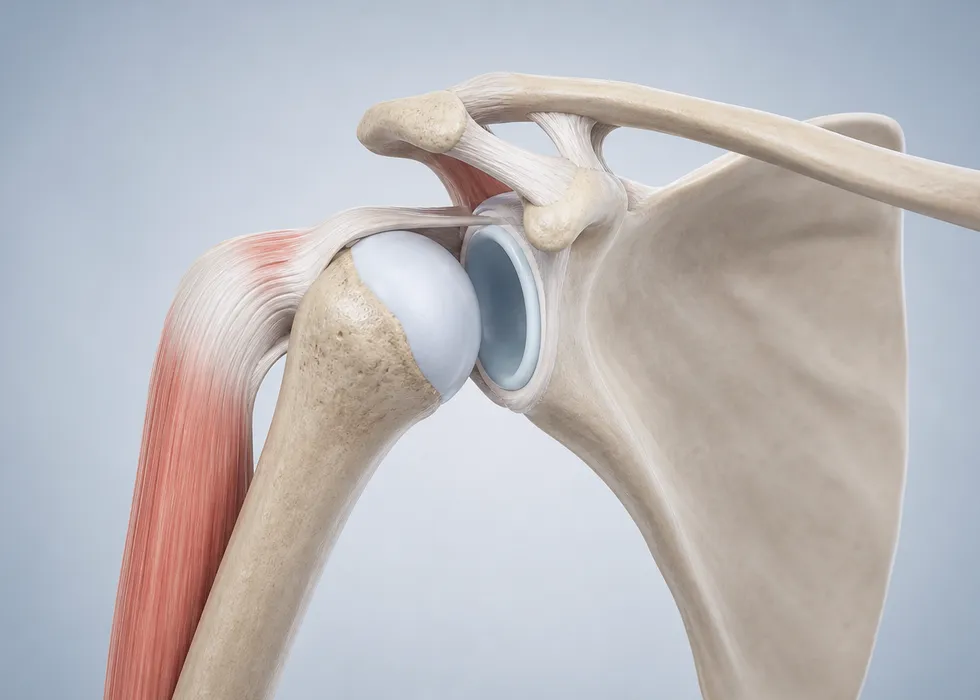
Shoulder dislocation is the most common major joint dislocation. It occurs when the head of the humerus moves out of the glenoid socket. Because the shoulder is designed for a wide range of motion, it is highly mobile but also vulnerable to instability after trauma.
Types of Dislocation
Most shoulder dislocations are anterior, meaning the humeral head moves forward. Less common patterns include posterior and inferior dislocation. The exact direction matters because mechanism, associated injuries, and treatment priorities differ.
Anterior dislocation often follows:
- A fall onto an outstretched arm
- Forced external rotation and abduction
- High-energy sports trauma
Posterior dislocation is less common and can be associated with seizure, electrical injury, or direct trauma.
What the Patient Feels
Typical findings include:
- Sudden severe pain
- Obvious deformity or loss of normal shoulder contour
- Inability to move the arm normally
- Guarding and muscle spasm
The diagnosis is usually clinically obvious, but radiographs are essential before and after reduction to confirm the direction of dislocation and look for associated fracture.
Why Associated Injury Matters
A shoulder dislocation may not be “just” a dislocation. Important associated problems include:
- Labral injury
- Glenoid bone loss
- Hill-Sachs lesion on the humeral head
- Rotator cuff tear, especially in older patients
- Nerve injury, particularly involving the axillary nerve
The likelihood of recurrence is also important. Younger athletic patients have a higher risk of repeated instability after a first traumatic dislocation.
Immediate Treatment
The first priorities are pain control, careful neurovascular assessment, and reduction of the dislocation. Reduction should be performed by trained clinicians using appropriate technique and safety precautions. After reduction, the shoulder is reassessed clinically and radiographically.
Immobilization may be recommended for a limited period, but immobilization alone is not the full treatment plan. The next step depends on age, activity level, recurrence risk, and associated injury.
What Happens After the First Event?
After a first-time dislocation, many patients benefit from:
- Temporary sling support
- Pain and swelling control
- Guided rehabilitation
- Progressive recovery of motion
- Rotator cuff and scapular strengthening
If instability recurs, or if imaging shows significant soft tissue or bone injury, surgical stabilization may be recommended.
When Surgery Is Considered
Surgery is more likely to be recommended in:
- Recurrent instability
- Younger competitive athletes
- Significant bone loss
- Associated labral tears causing persistent symptoms
The surgical approach may include arthroscopic labral repair, bone-block procedures such as Latarjet in selected cases, or additional techniques tailored to the pattern of bone and soft tissue injury.